
AI Workforce Readiness in Rehabilitation Care
AI workforce readiness is becoming a critical factor in rehabilitation pathways as artificial intelligence embeds across triage, assessment, monitoring, and digital prescription. As these systems scale, attention has rightly focused on technical capability, governance frameworks, and clinical safety. Yet one...

Clinical AI Adoption and Workforce Readiness in Modern Rehab
Clinical AI adoption is accelerating across healthcare delivery. It is already embedded across triage, assessment, digital rehabilitation, outcomes measurement, and clinical decision support. As these systems scale, a new challenge is becoming increasingly visible workforce readiness. For physiotherapy, the question...

Why Smart Rehab Is Redefining Physiotherapy Delivery
Smart Rehab is reshaping how physiotherapy exercises are prescribed, monitored, and progressed moving care from episodic handouts to continuous, data-supported rehabilitation pathways. While clinically sound in principle, this approach was designed for an era of episodic care not for modern...

Rehabilitation Engagement: From Concept to System
Rehabilitation engagement is often discussed as a “soft” aspect of physiotherapy something shaped by personality, rapport, or communication style.something shaped by personality, rapport, or communication style. Yet evidence consistently shows that engagement is one of the strongest predictors of rehabilitation...
Role of AI Motion Analysis in Scalable Rehabilitation Care
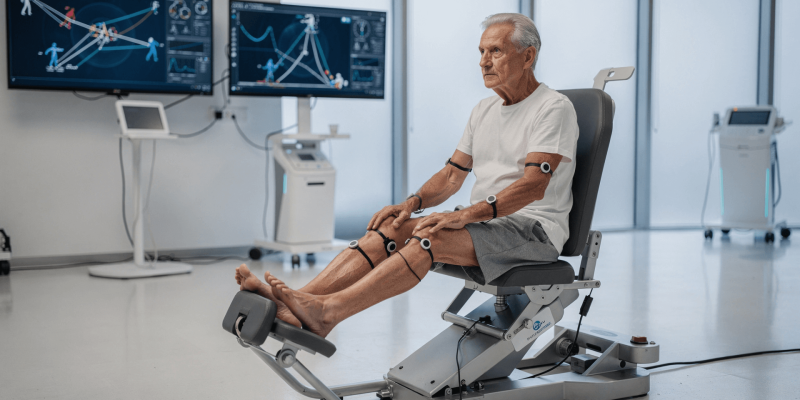
AI motion analysis is transforming how human movement is assessed—bringing objectivity, scalability, and precision to modern physiotherapy and rehabilitation systems.For physiotherapy and rehabilitation services, accurately assessing that movement has always been central to effective care. Yet traditional observation-based assessment, while...

How Rehabilitation Engagement Drives Value in MSK Care
Rehabilitation engagement remains one of the most persistent challenges in physiotherapy and MSK care. Many patients begin treatment with clear goals and strong intent, yet disengagement over time is common. Appointments are missed, home programmes lapse, and some patients exit...

AI-Enabled MSK Care: From Measurement to Scalable Rehabilitation
MSK care across healthcare systems is facing growing tension: rising demand, constrained workforce, and limited resources challenge traditional rehabilitation models. For insurers, commissioners, and healthcare operators, the challenge is not simply to deliver more care it is to deliver measurably...

Exercise Adherence in Physiotherapy: A System-Level Challenge
Exercise adherence remains one of the most persistent limitations in physiotherapy and rehabilitation. Despite well-designed interventions and clear clinical rationale, a significant proportion of patients do not complete prescribed exercises consistently. The result is delayed recovery, variable outcomes, and increased...
What AI Literacy in Physiotherapy Really Means in Practice
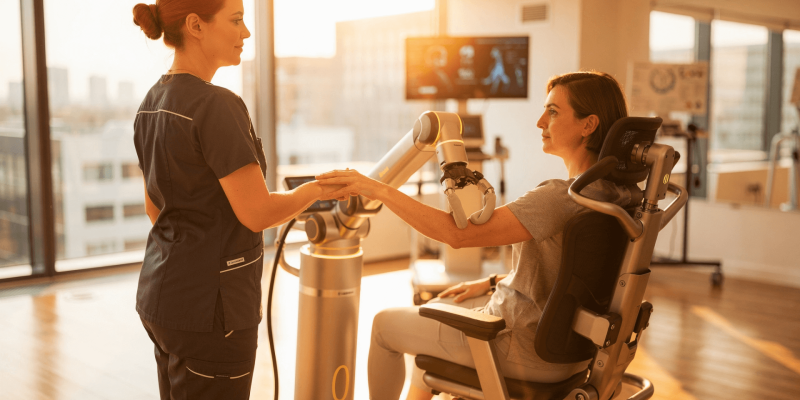
AI literacy in physiotherapy is no longer an emerging topic in physiotherapy and rehabilitation. It is already embedded across assessment, triage, monitoring, documentation, and decision support. As these systems scale, the question is no longer whether physiotherapists will encounter AI,...

AI in Rehabilitation Healthcare: From Innovation to Infrastructure
AI in rehabilitation healthcare is often described as a revolution in healthcare. The language is dramatic, the expectations high, and the promises expansive. Yet for many healthcare leaders, the lived experience of AI adoption feels far more uneven pockets of...